The Metaphysics of Seeing and Being Seen
Images as Living, Relational Beings in Contemporary Visual Culture
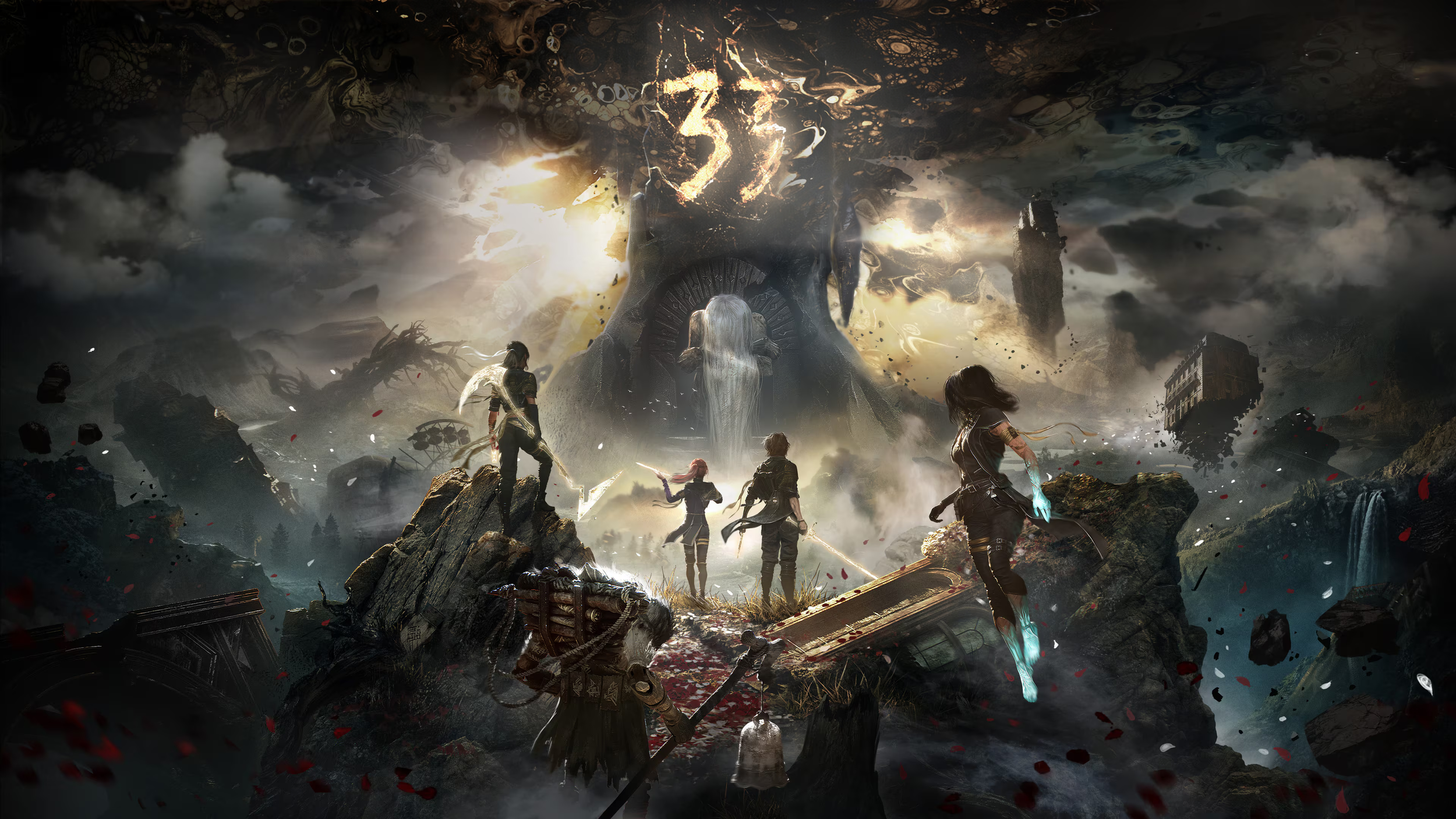
Sandfall Interactive, Sandfall S.A.S. Clair Obscur: Expedition 33
There is a particular aliveness imbued in the process of seeing and being seen where the gaze and the subject of the gaze experience an exchange of essence and relationship with one another. This is emphasized in spiritual traditions such as Shinto, animism, and mysticism where to witness something is to enter a relationship with it.
This essay is an exploration in the metaphysics of seeing and being seen by treating images as living relationship entities rather than inert objects or mere property. When we look—and when we are looked at—we enter into energetic and ethical relationships with images that outlast any moment of viewing. Additionally, I argue that authorship does not grant absolute ownership and instead it creates a responsibility to steward the life and afterlife of an image or images we bring into the world.
The Living Image: Lumiere as an Allegory of Image-Life
WARNING: spoilers ahead.
Within Clair Obscur: Expedition 33, the world of Lumiere offers a striking metaphor for the aliveness of images. Lumiere is a painted city created by a man named Verso. After Verso’s death, his essence—and the essences of his family—become bound within the canvas. What remains is not a static artwork but a living image-world, one that evolves, remembers, and responds to those who enter it.
Verso’s mother seeks to preserve the canvas, to safeguard the presence and memory it holds. His father, overwhelmed by grief and a desire to rewrite or undo the past, attempts to destroy it. Their conflict reveals a metaphysical truth often overlooked in contemporary visual culture: once something is created, it gains a life beyond the creator’s control.
Inside Lumiere, memories fracture, symbols distort, and relationships form with image-beings who possess their own agency. The canvas can be harmed or healed, distorted or restored, depending on how one engages with it. In this way, the game dramatizes a central claim of this essay: images behave as living relational entities, capable of suffering, renewal, and transformation through contact.
Lumiere implicitly asks its visitors:
Will you look in a way that listens?
Will you restore rather than exploit?
Will you recognize my life instead of treating me as property?
These are the same questions that arise when we engage with images in our world. The canvas of Lumiere functions not as narrative embellishment but as an allegorical mirror: once an image is brought forth, it participates in relationships—energetic, emotional, ethical—regardless of whether we recognize that life or not.
Walter Benjamin and the Vanishing Aura
Meanwhile, within the art world, Walter Benjamin’s 1936 essay The Work of Art in the Age of Mechanical Reproduction introduces the concept of aura in art where the singular presence, uniqueness, and spiritual gravity of an artwork is diminished through reproduction. For Benjamin, aura isn’t only beauty but the unrepeatable atmospheric essence of a moment or an object. When art is reproduced endlessly—filtered, decontextualized, mass-shared—the image risks losing its grounding as it becomes detached from its origin and stripped of relational depth.
This loss of aura is visible everywhere in social media. Here we witness images filtered to perfection by influencers and detached bits of sacred spaces such as the 1,000 Tori Gates in Kyoto. Social posts such as these can feel designed for likes rather than reverence and reduced to consumable content. Yet even when an aura is lost, something else begins: an afterlife. Reproduction does not kill the image; it changes the form of its life.
From Aura to Afterlife: The Image That Outlives Its Moment
Our digital world is wrought with images circulating and re-circulating beyond their original context or intention. This is when images can become stripped of their aura and enter a new kind of aliveness—viral, collective, nonlinear. An image posted online then moves from the realm of personal memory into the domain of public relationship. It is reinterpreted, reframed, reposted, and re-seen in ways no creator can fully predict.
Similar to Verso’s canvas in Clair Obscur, digital images begin to form new relationships with strangers, accumulate emotional and political meaning, and shape identity in the collective imagination. Contrarily, images can also undergo harm, distortion, or renewal as well. Thus, the image gains its afterlife—a relational momentum beyond original context—and begins to act in the world.
The Digital Gaze: Entering Contact Without Presence
As we encounter these images online, we aren’t simply viewing—we’re entering contact with a moment we didn’t live. In these moments, we touch the image with our gaze, receive its energy, and contribute to its ongoing life. In a sense, posting on social media becomes a form of transmission of essence, whether it be ours or anothers’ and viewing becomes a form of touch. The image doesn’t end with its initial birth and when circulated is a continued journey in the world where it evolves in various contexts. This process isn’t metaphorical. It is relational and we need to remember that seeing is never neutral.
Authorship, Ownership, and Stewardship
As we move across these different facets of the metaphysics of seeing and being seen in modern visual cultural imagery, we need to ask ourselves about authorship, ownership, and stewardship. Most of modern culture treats images as property—objects that can be owned, monetized, edited, deleted, or repackaged. Legally, this is often true. But metaphysically and ethically, ownership is insufficient. Authorship doesn’t equate ownership nor does ownership equate permission. Yet, creation does mean responsibility.
When we create images and add to visual culture, we initiate a relationship with something that now has:
Effects
Afterlives
Obligations
Resonance
Vulnerability
This can apply equally to:
Advertising campaigns
Photographs from sacred sites
Portraits of real people
Intimate digital self-representations
Cultural symbols turned into “content”
Verso’s father attempts to dominate and erase the canvas. Verso’s mother seeks to protect and tend to it. These two modes of interaction—domination and stewardship—mirror our real-world choices in engaging with images.
Images as Living, Relational Beings
When I describe images as “alive,” I am not claiming biological sentience. I am naming three dimensions:
Images have effects—emotional, political, spiritual
Images have afterlives—they circulate and act beyond creators
Images create obligations—they ask for responsible seeing
In this sense, images behave as relational beings. They exist in a web of contact, meaning, power, and feeling. They are not inert; they participate in the woven fabric of humanity. The language of living images is intentionally discomforting. It challenges the default assumption that images are neutral, silent, or “just content.” It asks us to reconsider what it means to witness—and be witnessed by—the worlds we create.
Conclusion: Toward an Ethics of Seeing and Being Seen
The metaphysics of seeing invites us to move more slowly through the visual world. It asks us to treat images not as products but as presences—living relational entities with their own life, history, and afterlife.
To see is to enter relationship.
To create is to give birth to something that will outlive us.
To share is to send a fragment of essence into the collective.
To be seen is to be touched.
The question is not whether images are alive but:
How do we meet the life of an image with care?
How do we witness without dominating?
How do we allow the sacred to remain partly veiled?
To engage ethically with images is to recognize their living nature, their vulnerability, and their power. In doing so, we restore a kind of aura—not through exclusivity or scarcity, but through relationship.
Sources
Azoulay, A. (2008). The civil contract of photography. Zone Books.
Barthes, R. (1981). Camera lucida: Reflections on photography. Hill and Wang.
Benjamin, W. (2008). The work of art in the age of mechanical reproduction. Penguin. (Original work published 1936)
Mitchell, W. J. T. (2005). What do pictures want? The lives and loves of images. University of Chicago Press.