What Cannot Be Measured: Art, Health, and the Limits of Knowing
“No man is more unhappy than he who never faces adversity. For he is not permitted to prove himself.”
— SENECA
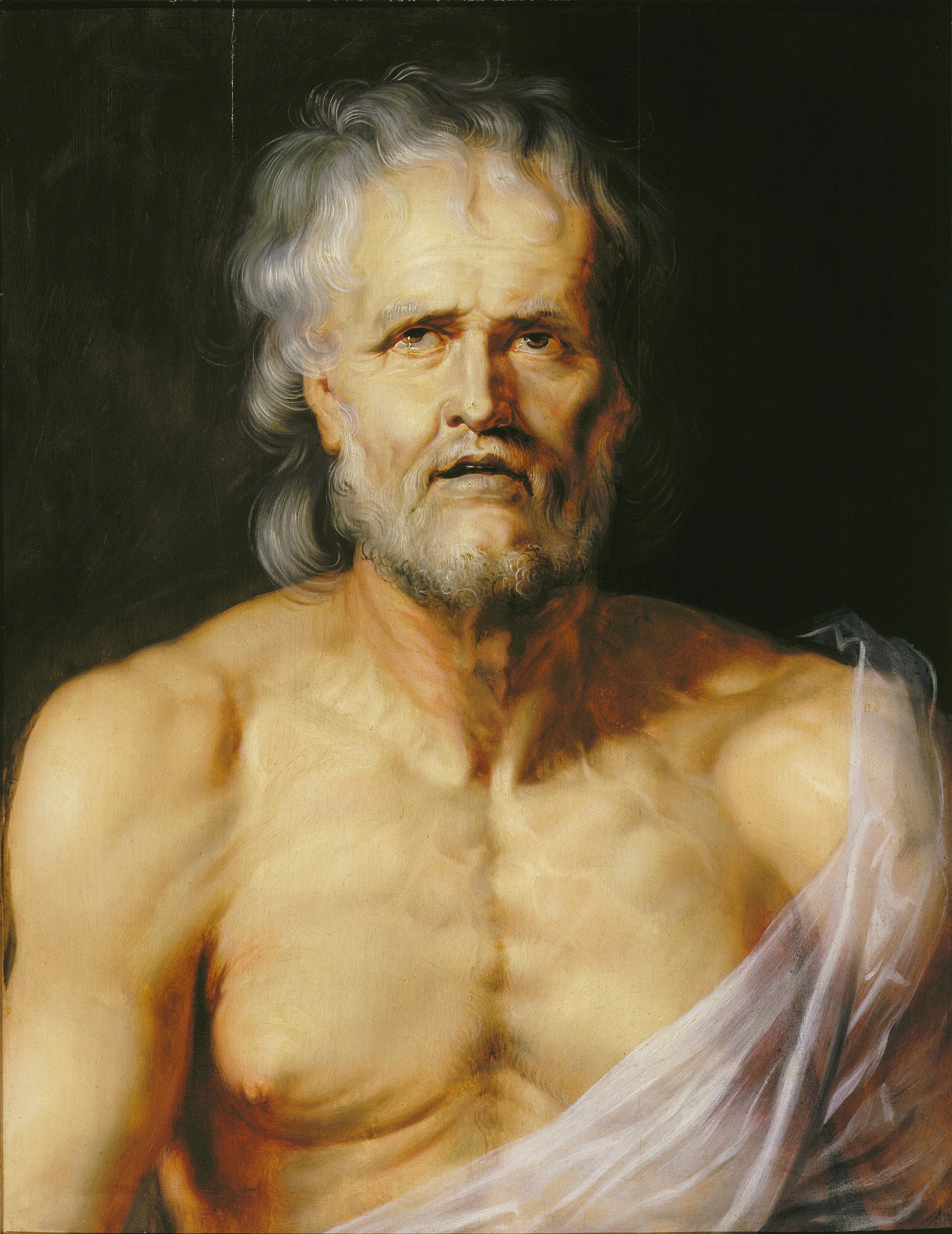
De stervende Seneca, Peter Paul Rubens, Museum Plantin-Moretus, 1612-1616
The connection between the arts and healthcare does not emerge in these materials as a single, unified field—it appears instead as a constellation of perspectives, each shaped by the light of their individual expertise, reflecting across one another. Across the Seattle and Houston creative economy reports, the video case studies, and the methodological framing from Making Sense of the Social World, what becomes clear is this: methodology is not neutral. It asks us to examine whether the arts are understood as economic datasets, behavioral strategies, or as sites of meaning shaped through lived experience.
The Seattle and Houston creative economy reports are grounded firmly in quantitative and economic analysis. They map the arts through data—job creation, revenue generation, sector growth (City of Seattle, 2019; Greater Houston Arts Alliance, 2019). In this framing, the arts become legible within systems of policy and funding. They are translated into the language of infrastructure. This is not insignificant. In fact, it is strategically powerful. By positioning the arts as an economic engine, these reports secure legitimacy within governmental and institutional frameworks that might otherwise overlook them.
But there is also a quiet reduction happening here. When creativity is operationalized into employment statistics and GDP contribution, something more ephemeral—more human—slips through the cracks. The methodology answers what is happening and to what scale, but it does not fully reach into why it matters or how it feels. It aligns most closely with descriptive and explanatory research approaches, which prioritize pattern recognition and causal relationships over lived meaning (Chambliss & Schutt, 2019). What remains unexamined in these reports is the assumption that economic validation is the most persuasive—or necessary—form of legitimacy. The arts are positioned as valuable because they produce measurable outcomes, rather than because they shape identity, culture, and perception in ways that resist quantification. In this sense, the methodology does not just describe the creative economy—it subtly disciplines it.
In contrast, the video materials move us into qualitative and experiential terrain. Here, the arts intersect with healthcare not as industry, but as practice—something enacted in bodies, in communities, in moments of vulnerability and healing. These sources rely on narrative, testimony, and observational insight—methods aligned with qualitative inquiry, where the goal is depth of understanding rather than generalizability (Chambliss & Schutt, 2019).
What is particularly compelling in these videos is their ability to capture transformation that resists quantification: shifts in identity, emotional regulation, and community belonging. These are not easily measurable variables, yet they are arguably central to any holistic definition of health. The arts, in this context, function less as intervention and more as environment—something that holds individuals as they reconstruct meaning.
At the same time, these qualitative approaches are not without limitation. There is often a lack of methodological transparency: participant selection, data interpretation processes, and researcher bias are not clearly articulated. While the emotional truth is evident, the absence of clearly defined research structures may limit the credibility of these studies within institutional or policy-driven contexts that privilege replicability and statistical validation.
This tension between what can be measured and what can be felt finds resolution—if not balance—in the concept of triangulation. As outlined in Chapter 8 of Making Sense of the Social World, triangulation involves the integration of multiple methods to strengthen the validity of research findings (Chambliss & Schutt, 2019). Across these materials, triangulation emerges not just as a methodological tool, but as a philosophical necessity. The economic reports provide scale and legitimacy. The qualitative narratives provide depth and meaning. Together, they begin to articulate a more complete picture of the arts-health ecosystem—one that acknowledges both structure and lived experience.
And yet, something remains absent.
Across both the reports and the videos, the artist themselves is often rendered invisible—either abstracted into labor statistics or positioned as a conduit for others’ healing. There is little sustained inquiry into the health of the artist as a worker within this system. This absence is significant. Creative labor is frequently marked by economic instability, emotional intensity, and a demand for continual output. To examine the arts as a vehicle for healing without examining the wellbeing of those producing that work is to overlook a foundational component of the system itself.
If these studies were to be extended, a longitudinal mixed-methods design centered on artists would offer a critical contribution. Quantitative data could track income stability, access to healthcare, and career sustainability over time, while qualitative interviews could explore identity, burnout, purpose, and resilience. Such a study could follow artists across multiple years, integrating surveys, interviews, and creative artifacts to better understand how artistic practice intersects with wellbeing. This approach would align with triangulation as a best practice while also reframing the research question—from what the arts do for others to what it costs to sustain them.
There is also an opportunity to more critically examine the underlying assumptions across all these materials. Much of the research implicitly accepts that the arts must justify themselves through economic or clinical outcomes. But this raises a deeper question: must value always be proven in the language of systems that were not designed to hold it? The arts operate in ambiguity, in contradiction, in spaces where meaning is not resolved but lived. To measure them exclusively through utility risks misunderstanding their function entirely.
Ultimately, the intersection between arts and healthcare is not simply interdisciplinary—it is the theory of human knowledge. It asks us to adapt competing ways of knowing: data and narrative, measurement and meaning, system and experience. The most responsible research design, then, is not one that collapses these tensions, but one that marries them into an integrated format. Because if there is anything the arts—and perhaps the Stoics—understand deeply, it is this: adversity is not something to eliminate, but something to encounter. Seneca’s assertion that we are “not permitted to prove ourselves” without adversity speaks directly to this space. Art does not remove suffering; it gives it form. It allows individuals to face, shape, and endure it—transforming experience into wisdom rather than fleeing from it. This is what resists measurement. Healthcare systems may seek resolution, outcomes, and control, but art operates differently—it lingers with us in the liminal spaces of life. Art asks us to both heal and comprehend. In doing so, art reveals what matters is not what can be crunched by numbers alone, but also what allows us to persist, interpret, and transform.